We've reached our destination – a former city, as our guides described it. It's amazing – once upon a time, I might not have even noticed an archaeological site here. Just some stones that don't quite look natural, but now, as a somewhat more experienced archaeologist, I see traces in these stones. I can't wait to see what might lie beneath them.
There's not much time or light to begin work today. The sun is obscured by trees and low. But tomorrow we'll assess the most interesting spots, mark the dangerous areas, begin to clear the sky and floor.
18th day of journey
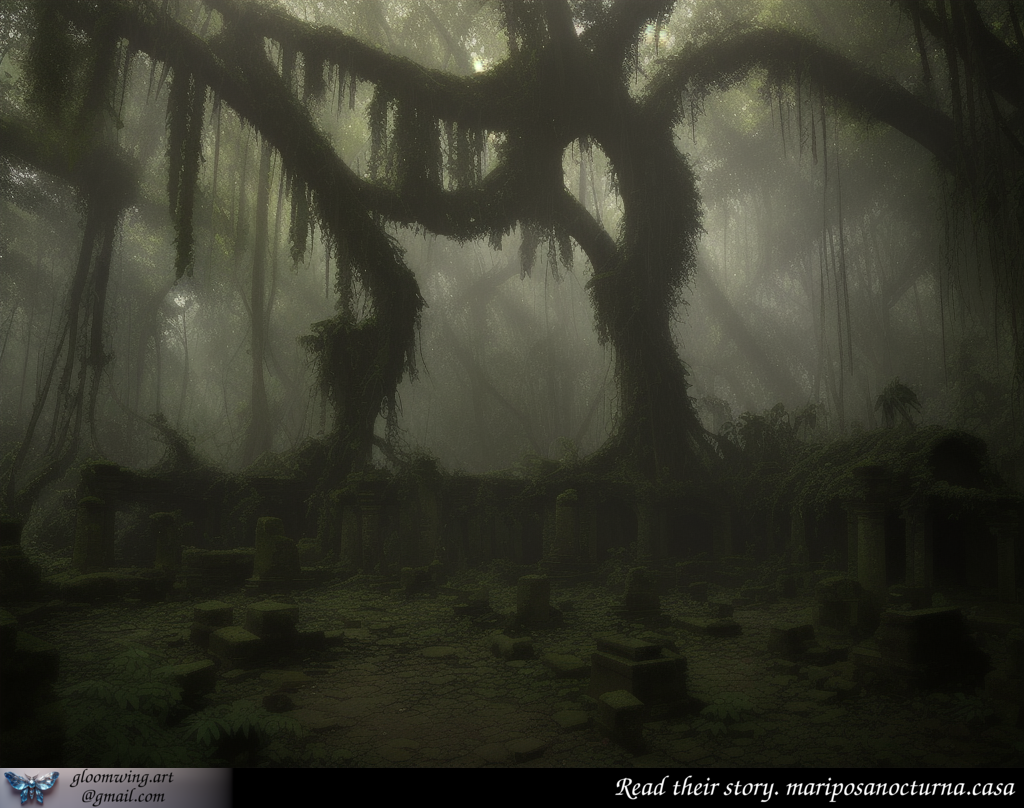
The sound of woodchopping woke me before dawn, a rhythmic thud that echoed through the dense jungle. Our guides had already begun work the day before, clearing the ground of tangled vegetation and felling smaller trees. They combed the terrain in search of pits and hidden cavities. Today, however, the focus shifted to removing the larger trees that blocked access to the excavation site. The area proved vast, and our archeologic work would stretch over days-or even weeks-before the full extent of the site could be revealed.
What impressed me most was the ingenuity of their technique. The locals used a system of ropes tied to the branches of one tree, looped around another as a pulley, to gently pull the tree away from the excavation zone while chopping. This method ensured that no valuable artifacts or structures were damaged, while also minimizing risks to the workers. By mid-afternoon, the effort paid off: the sky finally emerged from the canopy, casting a golden light over the cleared ground.
Our work has focused on selecting the most interesting objects- veel cellars were found, most with collapsed entrances, and several areas that, from their outline, appeared to be remnants of larger buildings. My more experienced colleagues have been scouting the surrounding area in search of cemeteries or temples, which are often located farther from human settlements. Although nothing significant was found today, we still haven’t lost hope.
After some debates and an academic exchange of views, our expedition leader decided where to begin our research. This meant setting up tents and preparing equipment for work, which we managed to complete today. Therefore, we will start our work tomorrow.
19th day of journey
Over the next three weeks, the entries reveal a series of discoveries-some mundane, others oddly captivating-from the perspective of the author, who often reflects on the enigmatic patron who funded the expedition. The narrator frequently mentions this figure, whose identity remains shrouded in secrecy, and the hope that their satisfaction will be the ultimate reward for the work undertaken.
What becomes clear is that the expedition was not, as I initially assumed, sponsored by the British government. Instead, it was funded by an anonymous benefactor who meticulously guarded their anonymity. All communication between the expedition leader and the patron occurred through intermediaries, with letters exchanged in coded or indirect ways. This deliberate obscurity raised questions, though the narrator acknowledges the necessity of such caution in the face of political or personal risks.
For my cousin, the expedition carried a different weight. His participation was less about academic curiosity and more about the thrill of witnessing the unknown. Yet, he occasionally remarks on the peculiar phrase as “they will certainly be rewarded for something”, hinting at the possibility of additional incentives beyond the initial sponsorship. The narrator also notes the presence of an observer, likely an agent of the patron, who shadowed the team’s movements.